The Courage to Say No: A Journey Toward Healthier Boundaries
We've all been there: staring at a calendar overflowing with commitments (mine is color coded and I think I have used up all possible colors), feeling the weight of expectations pressing down on us, and struggling to utter that simple two-letter word: "no."
In a recent Courageous Chutney Charcha, we explored why saying no feels so difficult for many women, even when they are exhausted or overcommitted. The conversation revealed a pattern: the struggle is rarely about time. It is about safety, belonging, and learned emotional responses.
The Hidden Weight of "Yes"
When we explore our resistance to saying no, we often discover layers of fear beneath the surface. Participants in our session identified concerns that many of us share:
fear of losing credibility,
being seen as unreliable,
letting others down,
or becoming an outsider.
These are not trivial worries, in fact they touch on fundamental human needs for
belonging,
connection,
and acceptance.
From a nervous system lens, saying no can feel risky. Our autonomic nervous system constantly scans for cues of safety or danger. Social rejection or disapproval can register as a threat, even if no real harm is present. In those moments, saying yes can feel safer than saying no.
But here's what's particularly insidious: many of us have been culturally conditioned to equate selflessness with virtue and self-care with selfishness. This conditioning runs especially deep in cultures that emphasize collective harmony over individual needs, creating what researchers call "interdependent self-construal"—where our identity is fundamentally tied to our relationships and roles within groups.
Understanding Guilt: The Learned Emotion

One of the most important reframes we explored was recognizing that guilt is a learned emotion, not an accurate moral compass. Just because you feel guilty doesn't mean you've done something wrong.
Guilt often serves as internal programming from childhood messages, cultural expectations, and societal norms.
Dr. Brené Brown, in her extensive research on shame and vulnerability, distinguishes between guilt (I did something bad) and shame (I am bad), noting that while guilt can sometimes motivate positive behavior change, chronic guilt—especially around self-care—often signals misaligned values rather than genuine wrongdoing.
Many fears are disproportionate to reality. Would saying no to one social event truly make you an outsider? Would declining an extra work project genuinely destroy your credibility? Often, our catastrophic predictions don't match actual outcomes.
The Hidden Costs of Overextension

What happens when we consistently override our boundaries? Our discussion revealed common patterns:
Calendar overwhelm that leaves no room for rest or spontaneity
Resentment that seeps into relationships we care about
Comparison to others who seem to manage it all effortlessly (they probably don't)
Proving cycles where we feel we must constantly demonstrate our worth through productivity
Missing out on what truly matters while saying yes to what doesn't
Reframing Boundaries: From Selfishness to Self-Regulation

The most transformative shift in our discussion came from reframing boundaries not as walls we build against others, but as a form of self-regulation—a way of managing our own energy, capacity, and well-being.
Small no’s build regulation. Each time you pause and choose intentionally, you teach your nervous system that honesty is safer than overextension.
To get you started here are some Reflective Journal Prompts
Use these slowly and honestly. There are no right answers.
What labels do I fear when I say no? (Unreliable, selfish, uncaring?) What do these labels mean to me, and are they accurate?
What are the actual consequences of saying no versus my imagined consequences?
Where in my life am I saying yes out of guilt rather than genuine alignment with my values?
Starting Small: The Practice of No
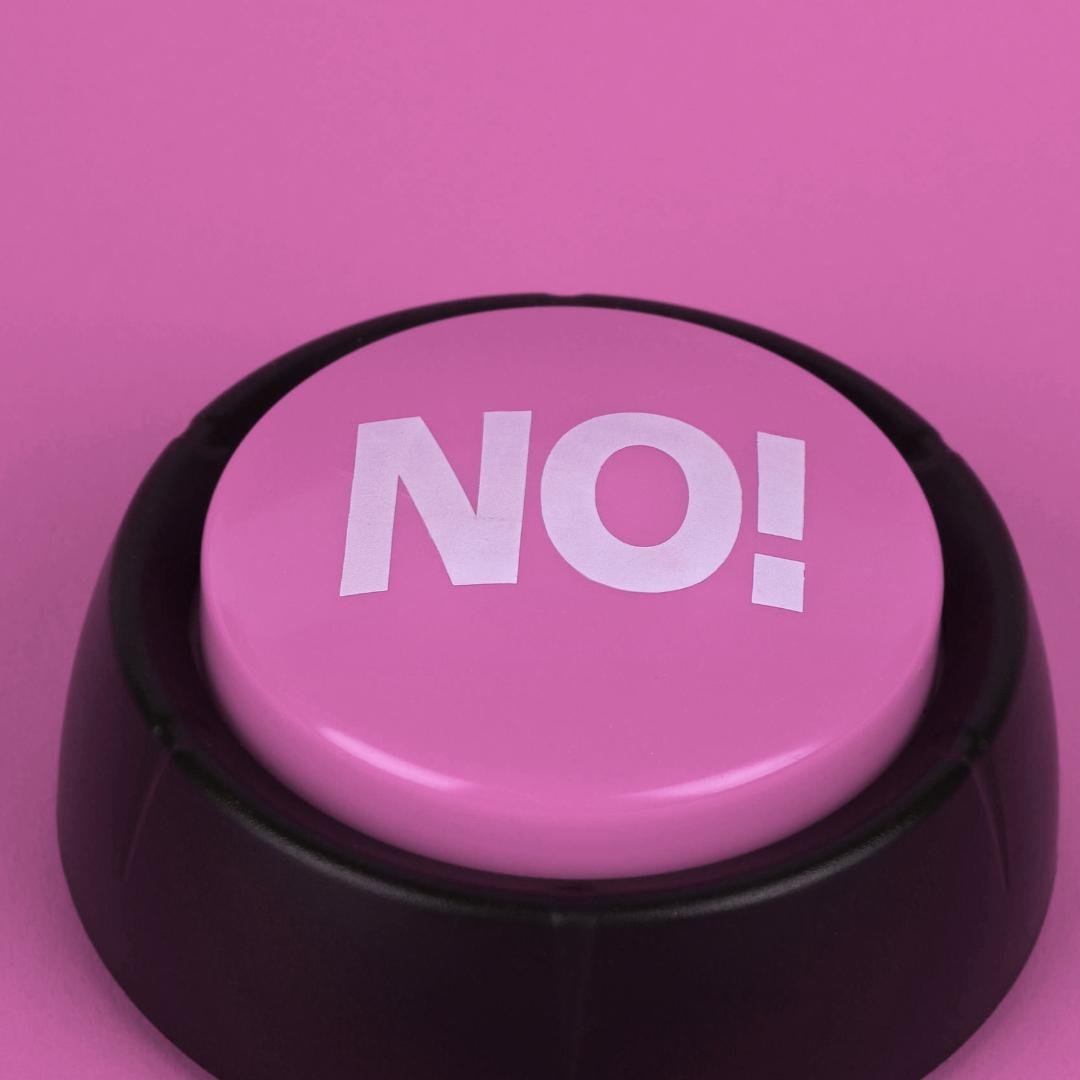
Change doesn't require dramatic transformation. Our group explored starting with small acts of boundary-setting:
Declining simple, low-stakes requests
Adding buffer time between commitments rather than booking back-to-back
Practicing "Let me check my calendar and get back to you" instead of immediate yes
Saying "I can't commit to that right now" without elaborate justification
I encouraged the group, practicing with small nos builds the muscle for bigger ones. It's like strength training for your boundaries—you start with lighter weights and gradually increase capacity.
Moving Forward
The courage to say no is ultimately the courage to say yes to yourself. And in doing so, you model for others—especially those watching you—that self-care isn't selfish; it's sustainable.
What small no might you practice today? Where might saying no actually be the most loving thing you can do—for yourself and for others?
