Closing the Year Gracefully: The Art of Emotional Decluttering and Energy Release
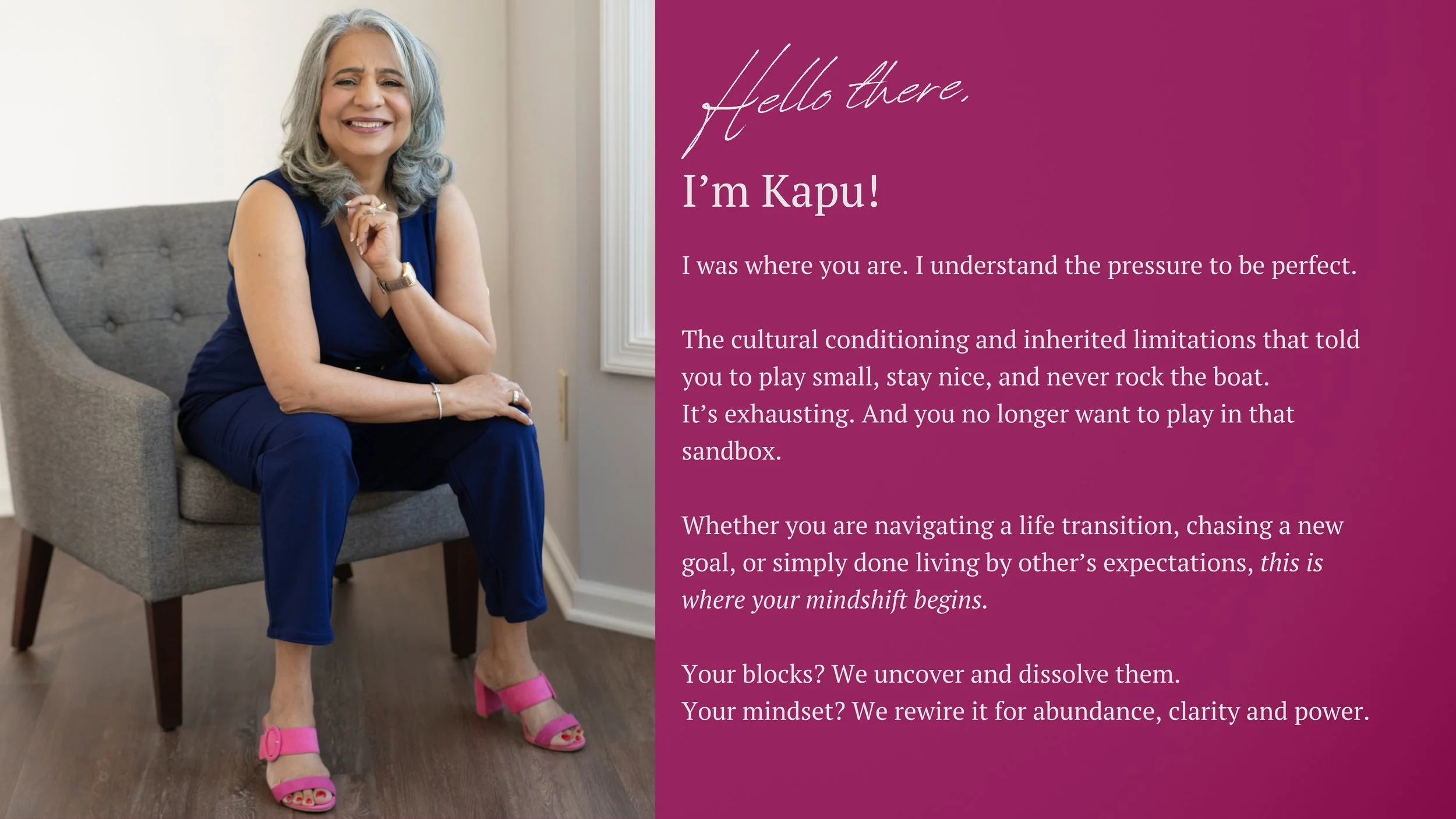
By Kapu Patel, Ph.D., ACC, Mindset Coach
Founder, YouShine® Mindset Coaching
The Season of Gratitude and Letting Go
November brings its own kind of bustle. Recipes, travel plans, family gatherings, and that familiar tug between gratitude and exhaustion. It’s the season when we prepare to say thank you — but also, if we’re honest, when many of us feel ready to say goodbye to the year.
Before the gratitude lists and the pie, I like to make a closure list.
It’s a gentle way of asking: What emotional clutter do I want to clear before I carry it into 2026?
Because peace doesn’t come from what we add. It comes from what we’re willing to release.
Why Closure Matters More Than You Think
Humans crave resolution — that sense of emotional completion that helps us make meaning of experiences. Without it, our minds loop endlessly, replaying what we wish we’d done differently or wondering why something ended the way it did.
It’s not just mental noise; it’s an energy leak.
That “I’m tired but I haven’t done that much” feeling?
It might not be your to-do list; it might be emotional tabs running quietly in the background. I feel that overwhelm even when I have more than 5 browser tabs open, so you can imagine what those million unfinished tasks can do to a person like me.
Energy Follows Attention
Where your attention goes, your energy follows.
When your attention is stuck in the past — a project that fizzled, a relationship that strained, or a dream that stalled — your energy stays there too.
Closure is emotional recycling — keeping the wisdom, releasing the waste.
This energy hygiene is the practice of noticing where your energy is being spent unconsciously. Maybe it’s that mental replay of something you can’t change. Maybe it’s the tiny hesitation you feel every time you think about a conversation left unsaid.
Once you see it, you can release it. And that single act often opens a rush of clarity and relief.
The Emotional Decluttering Framework
Try this structured framework to help end the year consciously and cleanly.
1. Reflection — What needs acknowledgment?
Before we can release, we must recognize.
Take a quiet hour with your favorite drink and ask:
What went well this year?
What surprised me?
What am I proud of that I haven’t celebrated?
Even ten minutes of honest reflection and expressive writing strengthens emotional regulation, cognitive clarity, meaning making and leads to closure.
2. Release — What needs letting go?
Letting go isn’t a dramatic act; it’s a quiet decision. It’s exhaling the stories that no longer serve.
Try writing a simple sentence: “This experience taught me what it needed to, and now I release it.”
Or simply say, “You know what? That’s done.”
Your body often tells the truth before your mind does — notice where you feel tightness or fatigue. That’s where energy is asking to be freed.
3. Reframe — What needs a new meaning?
Sometimes closure isn’t possible until we shift the lens.
Maybe that setback was a redirection.
Maybe the silence taught discernment.
Ask: If this was secretly working for me, what might it have been teaching me?
This reframing activates the part of your brain that turns experience into growth instead of rumination.
4. Renewal — What needs to be invited?
Once space is cleared, something beautiful happens — room opens for new energy.
Ask: What quality do I want to embody in 2026?
Peace? Playfulness? Confidence?
Name it now, not in January.
Energy grows where it’s acknowledged.
Bringing Humor and Humanity into the Process
Let’s be honest — no one “has it all together” in November. We’re all somewhere between meal prep, reflection, and wondering how many people are actually coming for dinner.
And that’s okay. Closure doesn’t require perfection or incense.
It simply asks for presence.
You can reflect while stirring soup or sitting in traffic. You can let go mid-laundry. Transformation doesn’t always look ceremonial. Sometimes it looks like choosing not to mentally replay something for the hundredth time.
When we meet life with a lighter heart, closure becomes less of a chore and more of an act of self-respect.
As a coach, I see the end of each year as sacred terrain — a natural invitation to integrate growth. My clients often describe year-end sessions as both grounding and energizing.
They come in carrying fatigue, confusion, or restlessness — and leave with clarity, compassion, and direction.
Why? Because we don’t set new goals right away.
We close the old ones first.
Together, we unpack what needs acknowledgment, forgiveness, and reframing. We release emotional clutter so their energy can be redirected toward what’s next.
This process turns reflection into readiness — and closure into courage.
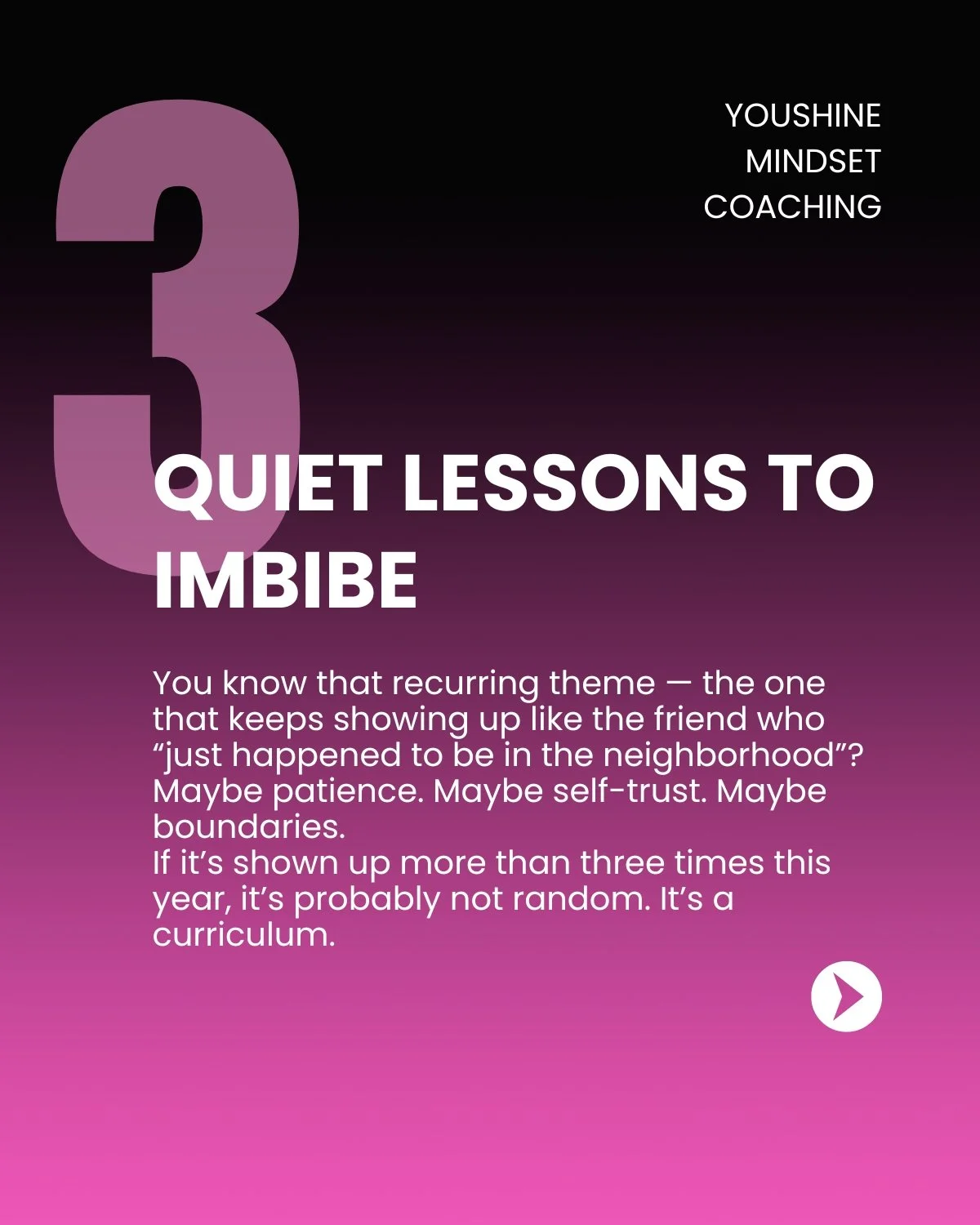
Try these five prompts to shift your mindset for closing out the year.




The YouShine® Takeaway
Before you write your resolutions, make room for renewal.
Before you say “yes” to what’s next, honor the goodbyes that made you who you are.
Think of it as emotional housekeeping before your new dreams arrive.
When you step into the new year light, clear, and centered — you invite alignment instead of effort.
And that’s where true transformation begins.
Your Reflective Year-End Coaching Invitation
If this season finds you craving clarity or closure, consider gifting yourself a Reflective Year-End Coaching Session — a personalized 90-minute experience designed to help you declutter emotional energy, integrate lessons, and enter 2026 with focus and freedom.
You’ll leave lighter, clearer, and deeply aligned with what’s next.
A personalized 90-minute experience designed to help you declutter emotional energy, integrate lessons, and enter 2026 with focus and freedom.
These sessions will be held virtually at a mutually scheduled time.
Once you purchase the session, we will email you a scheduling calendar link for you to book at time at your convenience
If you have questions, simply write to me at kapu@youshinemindsetcoaching.com OR